Liminality
A wedding hall before the guests arrive feels oddly charged: chairs are in place, music is still silent, and the people gathered there are no longer quite who they were, but not yet what the ceremony will make them. A child on the first day of school, a traveler at a border crossing, mourners before the coffin is closed — each stands in a threshold moment in which ordinary roles loosen and the world seems briefly unfastened. These moments can feel unsettling, but also strangely open, as if a hidden order were waiting just beyond the frame.
This is the force of liminality: the condition of being betwixt and between stable states. In religious and mythic life, rites of passage often use this middle phase to suspend everyday identity, exposing a person or community to uncertainty before reintegration. The concept helps explain why thresholds matter so much. They are not empty intervals between real things; they are places where rules soften, symbols intensify, and transformation becomes possible.
Liminality reveals that change is rarely instantaneous. It often depends on a protected in-between space where old meanings have weakened but new ones have not yet settled. That insight reaches beyond ritual into migration, adolescence, mourning, and political transition, where ambiguity can be both danger and opportunity. To follow liminality further is to ask how cultures mark thresholds, why they fear them, and why so many stories place revelation exactly there.
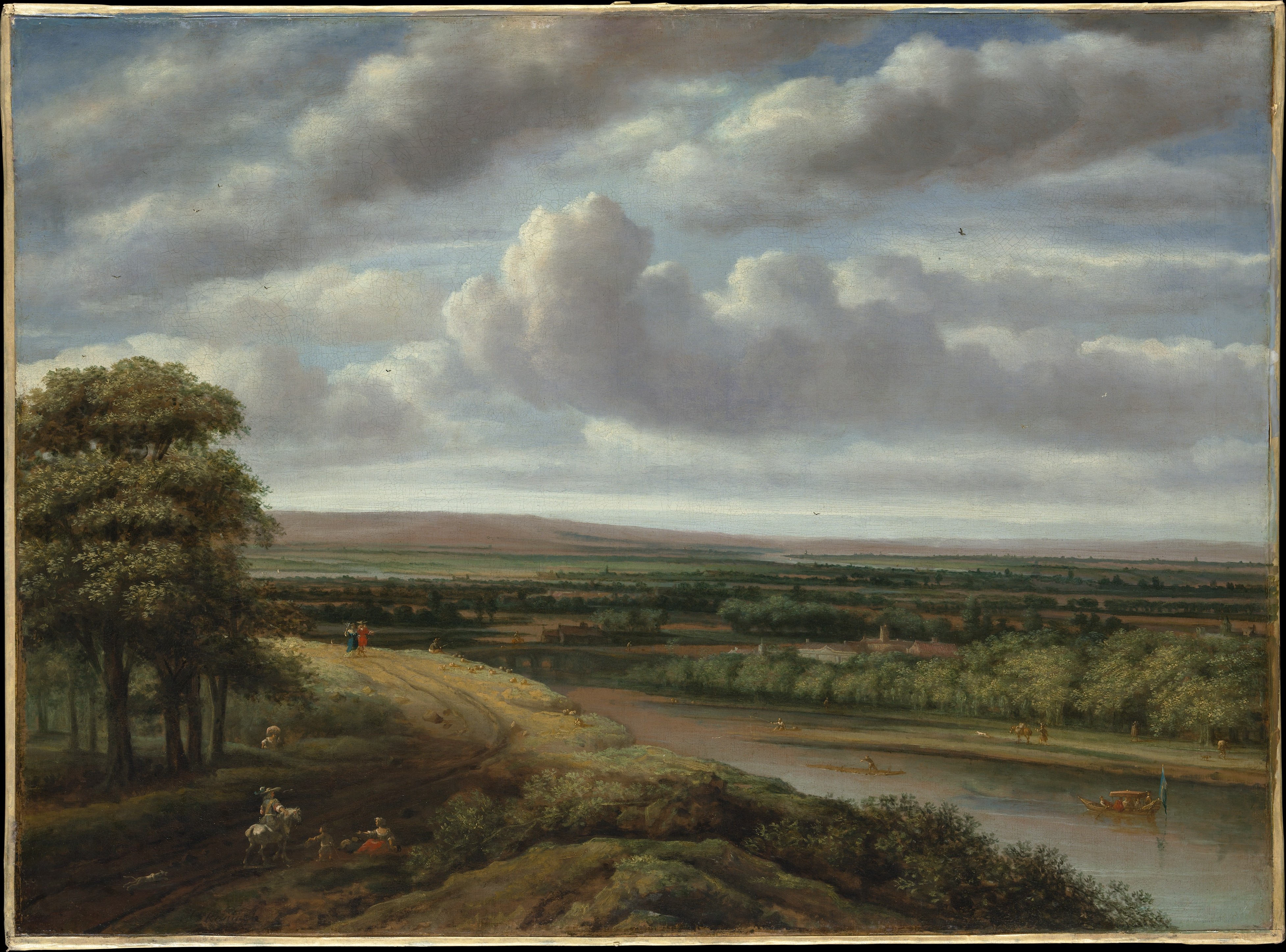
That must be a Sunday or something because there's very little labour on that painting. Rule of thirds though, with a lot of prominence to the sky. And while figures are always enclosed in a small physical space in the canvas, the perception is spacious.